
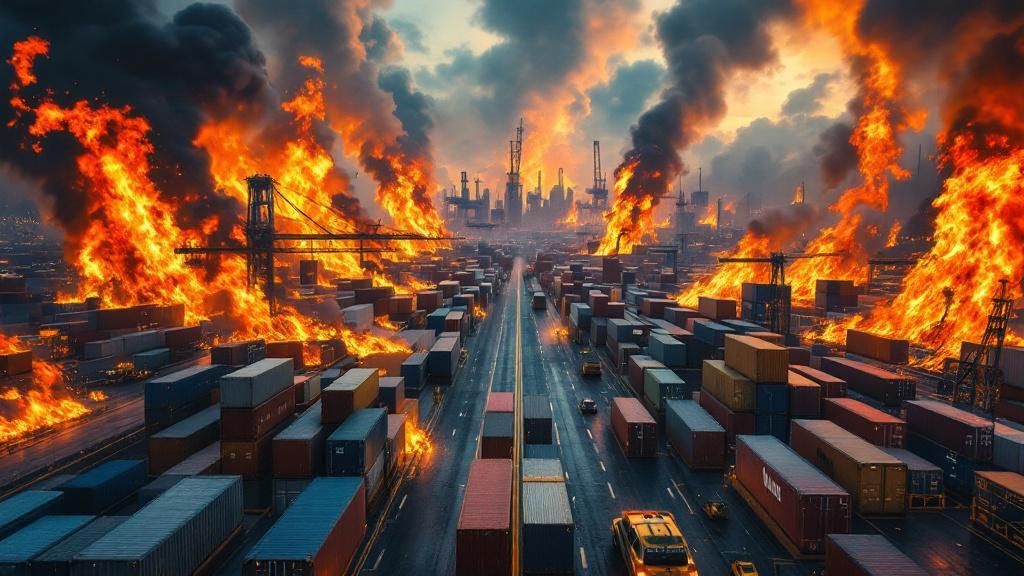
The international trade terrain has declined markedly as the world’s prominent economies adopt increasingly aggressive tariff frameworks, sparking a wave of retaliatory measures that risk undermining long-standing economic cooperation. From transatlantic disputes to tensions in the Asia-Pacific region, trade barriers are reshaping world markets and generating worry among economists and policymakers similarly. This report explores the mounting trade tensions, its root causes, and the foreseeable effects for companies and shoppers worldwide.
Growing Protectionism and Economic Impact
The revival of protectionist policies represents a major transformation in how leading countries manage international commerce. Governments are steadily emphasising domestic industries over open trade policies, citing concerns about workforce displacement and domestic security. This trend has appeared in the form of significant duty hikes on imported goods, especially within areas like steel, aluminium, and technology. The effects go further than mere price fluctuations, threatening to disrupt distribution networks that have been meticulously constructed over many years, finally influencing enterprises across the spectrum across numerous regions.
Financial analysts warn that mounting tariff walls could significantly hinder worldwide economic expansion and household spending capacity. When tariffs are imposed, expenses generally cascade through distribution networks, leading to higher prices for shoppers and reduced profit margins for companies. Furthermore, counter-tariffs generate instability in markets, deterring capital deployment and technological advancement. The International Monetary Fund has cautioned that prolonged trade tensions could reduce global economic expansion, especially affecting developing nations that rely significantly on export-driven economies. These interconnected consequences highlight the fragile nature of contemporary international trade.
Major Stakeholders and Tactical Approaches
The escalating tariff crisis affects the world’s leading economies, each pursuing different strategic objectives to protect home-based sectors and gain competitive advantages. The United States, European Union, and China have emerged as major actors, with additional countries including Japan, India, and the United Kingdom introducing supporting actions. These nations’ positions reflect contrasting economic priorities, international dynamics, and internal political demands, together heightening global trade tensions and creating unprecedented uncertainty for multinational corporations and supply chain operators worldwide.
United States Trade Policy Shifts
The United States administration has introduced a protectionist stance, imposing considerable tariffs on goods from China, steel, and aluminium whilst warning of additional duties on automobiles from Europe and farm produce. These measures aim to decrease America’s persistent trade deficit and reinvigorate manufacturing sectors at home harmed by years of global trade. Policymakers maintain that carefully planned tariffs safeguard security concerns and create fair competition against unfair foreign trading practices, especially concerning IP theft and technology transfer demands.
American businesses encounter substantial uncertainty about forthcoming duty schedules and possible retaliation from trade counterparts. Manufacturing sectors including automobiles, agriculture, and technology have mobilised significant lobbying efforts against planned levies that threaten profitability and competitiveness. The administration’s inconsistent strategy has generated instability in financial markets, causing firms to reassess supply chain strategies and consider relocating production facilities to duty-advantaged locations.
- Impose tariffs on Chinese goods totalling over three hundred billion dollars annually
- Establish steel and aluminium duties influencing friendly nations considerably
- Threaten additional tariffs on European automobiles and agricultural shipments
- Emphasise bilateral trade agreements rather than multilateral frameworks
- Employ tariff warnings as negotiating leverage in trade discussions
Global Economic Implications
The escalating tariff conflicts have caused considerable volatility across worldwide financial markets, with equity indices experiencing considerable swings as investors reconsider economic forecasts. Currency markets have become increasingly unstable, reflecting concerns about future trade policies and their implications for corporate profitability. Global companies, particularly those dependent upon cross-border logistics chains, face mounting pressure as input costs rise and consumer demand weakens. Analysts forecast that extended trade tensions could dampen worldwide gross domestic product growth, potentially inducing economic slowdown across advanced and developing economies alike.
Consumer-facing industries confront especially severe challenges, as tariff-induced price increases undermine purchasing power and demand elasticity. Manufacturing sectors reliant upon imported raw materials and components face compressed margins, whilst agricultural producers struggle with retaliatory restrictions on exports. Financial institutions are tightening credit conditions amid heightened macroeconomic uncertainty, possibly constraining investment and employment growth. Policymakers globally must navigate this challenging environment whilst preserving economic stability and employment levels, necessitating coordinated diplomatic efforts to reduce tensions and restore confidence in multilateral trade frameworks.
